
Who is the Holy Spirit?
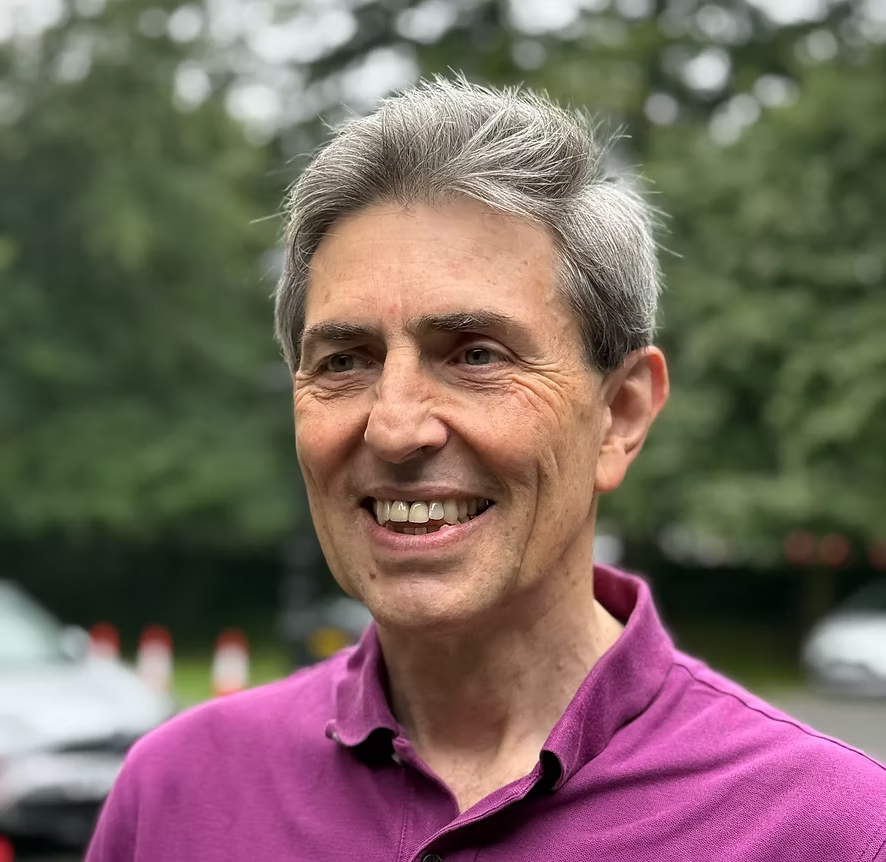

Bp Tim reflects on powerful experiences of the Holy Spirit, beginning with visits to a Pentecostal church in Birmingham led by two women with striking ministries—one a street preacher, the other focused on deliverance and the Spirit’s power. A vivid moment is recalled where a drug addict was transformed within minutes—delivered, converted, speaking in tongues, and preparing for baptism—raising the central question: is the Holy Spirit merely an idea, or a lived reality?
The message emphasizes that Christian faith is not just intellectual but experiential. Drawing on theologians like Irenaeus and Jonathan Edwards, the speaker highlights that true faith involves being “fully alive” in God and grounded in real spiritual experience, not just emotion or theory. Personal testimony reinforces this: discovering the Holy Spirit as a teenager opened up a deeper dimension of faith and awareness of God’s work globally, especially through the growth of Pentecostal and charismatic movements.
Biblical passages from Acts show that the Holy Spirit is given as a real, transformative power through the risen Christ. Paul’s dramatic conversion illustrates this: once a violent persecutor, he is turned around by God into a missionary to the Gentiles. His journey also shows that spiritual growth takes time—through reflection, struggle, and preparation before fruitful mission begins.
Paul presents us with the Holy Spirit as the God who turns us around: turns around our whole being in our context and culture. Everything is turned around to God and to his mission to be used in this service.
Tim connects this to the church’s present mission, particularly engaging with the local community and learning from global perspectives, such as African Christianity, which often has a stronger awareness of the spiritual realm: the Spirit, our spiritual nature and the reality of spirts (good and evil). The Holy Spirit is described as active, powerful, and present—not only in individuals but across cultures and the wider world.
Theologically, in answering the question ‘Who is the Holy Spirit?’, the Spirit is affirmed as “the Lord, the giver of life,” worthy of worship alongside the Father and Son. The Spirit empowers, sustains, and guides believers through all stages of life: getting our life together, giving our life away in service, and finally giving our death away, offering our later years as a blessing to others.
Three key images of the Spirit are presented:
The sustainer of life, like a hand supporting growth.
The one who heals and renews, brooding over a broken world to bring life from trauma.
The flame of God, calling believers not just to routine faithfulness but to passionate, Spirit-filled living.
The conclusion is a challenge: the Holy Spirit is real and active, calling individuals and the church into deeper experience, transformation, and mission. Rather than settling for routine or intellectual faith, believers are invited to “burn for God”—to live fully alive in the Spirit’s power and purpose.


